

JNA PRESS | Human Story
Jenin, West Bank – Palestinian journalist and former prisoner Mujahid Bani Muflih remains hospitalized at Ibn Sina Hospital in Jenin, northern West Bank, months after his release from Israeli prisons. He continues to undergo extensive medical treatment after suffering a brain hemorrhage just two days after his release, while the long-term consequences of his injuries continue to affect nearly every aspect of his daily life.
Israeli forces arrested Bani Muflih from his home in the town of Beita, south of Nablus, in 2025. He spent six months in Israeli detention, during which he says he was subjected to starvation, physical and psychological torture, and medical neglect.
Two days after his release, he suffered a brain hemorrhage and was rushed to hospital, where he underwent emergency surgery to stop the bleeding before falling into a coma that lasted two months.
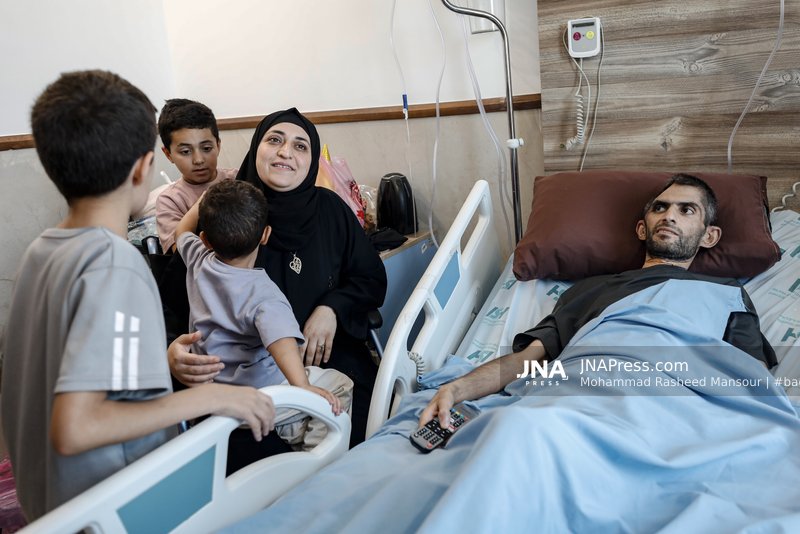
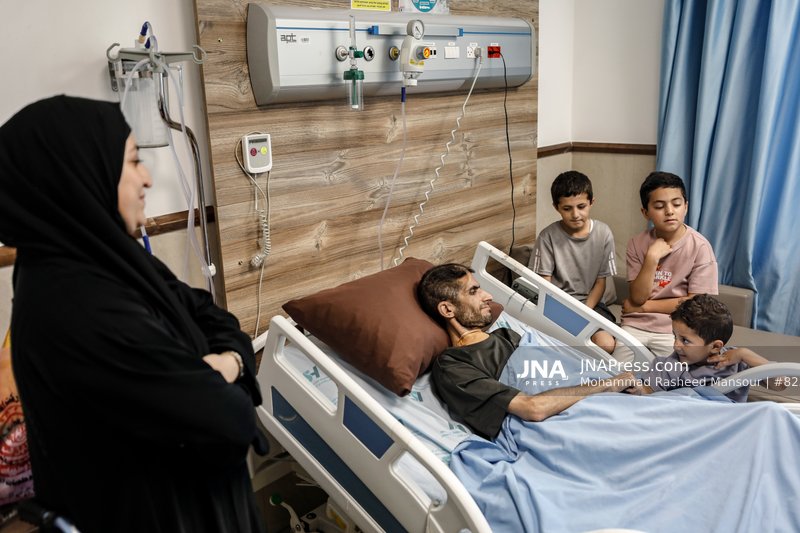
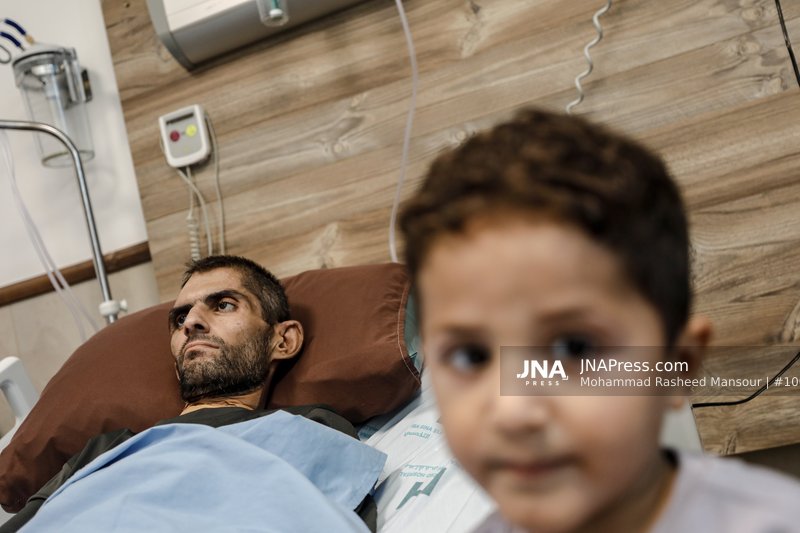
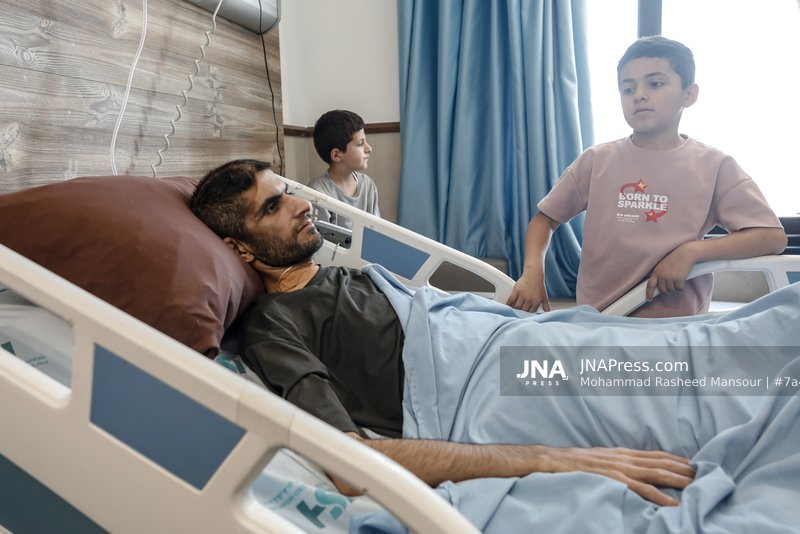
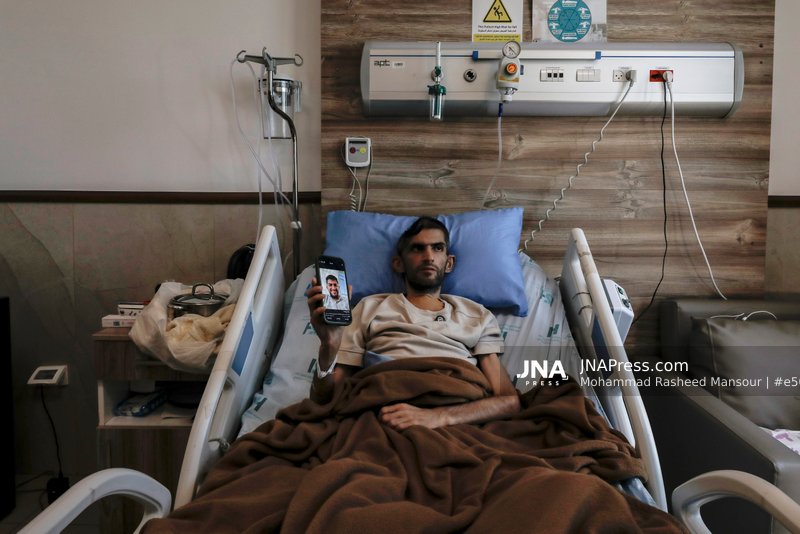
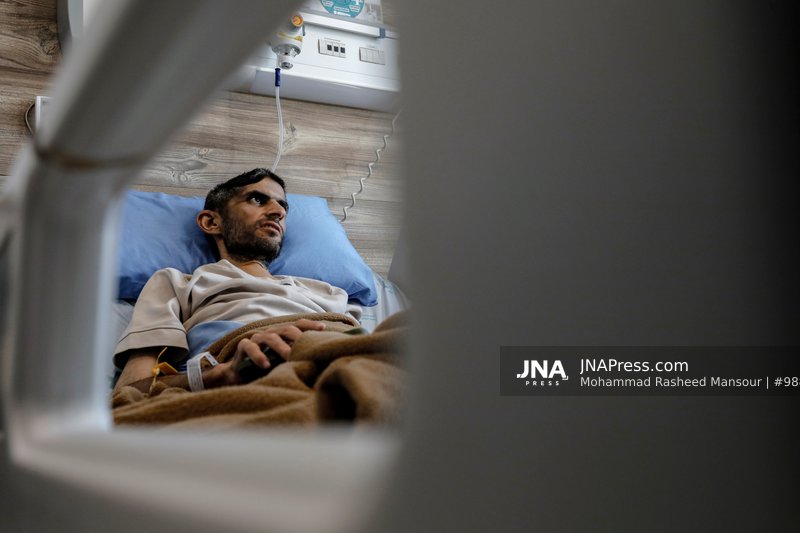
Although the surgery was successful, the effects of the injury continue to this day. He lost movement on the left side of his body, relies on a wheelchair for mobility, and continues to undergo physical and occupational rehabilitation. He is also awaiting reconstructive surgery to replace the section of his skull that was removed during the emergency operation.
136 Days Without Speech
Inside his hospital room, Bani Muflih is surrounded by his three children. Using only his right hand, he gently tries to comfort his youngest daughter after losing the use of his left side due to the injury.
For 136 days, he was unable to speak and communicated with those around him only by writing.
"Losing the ability to express what I felt was one of the hardest things I have ever experienced," he says.
He adds:
"I realized that the Mujahid who entered prison is not the same Mujahid who left it.
The occupation deliberately tried to break my will through torture, starvation, and intimidation. I knew everything I endured was intended to destroy the journalist within me. Today, however, I am even more determined to hold on to my profession and tell the world what I witnessed."
After nearly five months of forced silence, he finally managed to utter his first words. Even now, speaking quickly exhausts him, so he often continues to communicate through writing.
A Long Road to Recovery
His wife says Bani Muflih lost more than 25 kilograms during his ordeal and still requires assistance with most daily activities.
He continues to receive nutrition through a feeding tube while undergoing an intensive rehabilitation program.
She explains that the family was forced to rent an apartment near the hospital because repeated travel had become extremely difficult due to Israeli checkpoints. Their three children now spend most of their time by their father's bedside, as the hospital has effectively become part of their daily lives.
Although his condition has gradually improved, he still requires additional surgeries and long-term rehabilitation in hopes of regaining part of his mobility.
"I Remain Committed to My Mission"
Despite everything he endured, Bani Muflih says imprisonment has only strengthened his commitment to journalism.
"Everything they did was meant to destroy Mujahid the journalist, but today I am more determined than ever to report the truth to the world."
He continues:
"I learned that a piece of bread can become a dream, that a sip of cold water can feel like a blessing, and that freedom and dignity are the greatest treasures a human being can possess."
Statistics and Context
Bani Muflih's story comes as Palestinian organizations monitoring prisoners' affairs report that approximately 9,500 Palestinian prisoners are currently held in Israeli prisons, including 93 women and 400 children.
The figures also include around 3,500 administrative detainees held without charge or trial, and approximately 1,400 detainees classified by Israeli authorities as "unlawful combatants."
Prisoner advocacy organizations say many released detainees have left prison suffering from serious medical conditions and long-term injuries requiring ongoing treatment. Human rights organizations continue to call for independent investigations into reported abuses inside detention facilities and for accountability in accordance with international law.
The report also coincides with the observance of the International Day in Support of Victims of Torture, marked annually on June 26, which highlights the absolute prohibition of torture and calls for the protection of detainees and accountability for those responsible for abuses.
For Mujahid Bani Muflih, the suffering did not end with his release from prison. His recovery continues, but one thing, he says, remains unchanged—his belief in the mission of journalism.
"The body may grow weak, but the truth is always worth telling."
Source: JNA PRESS, based on interviews with Palestinian journalist Mujahid Bani Muflih and his family, data from Palestinian prisoners' organizations, and published information.

mariam tarifii
Author at JNA Press
Covering Palestine, Lebanon, Syria and Middle East Affairs
View Profile