

JNA PRESS | Human Story
Gaza, Palestine– The ceasefire declared in the Gaza Strip in October 2025 has not brought an end to the killing of Palestinian journalists.
According to Palestinian media and human rights organizations, 11 journalists and media workers have been killed since the ceasefire took effect, while international press freedom groups continue to warn that Gaza remains one of the world's most dangerous places for journalists.
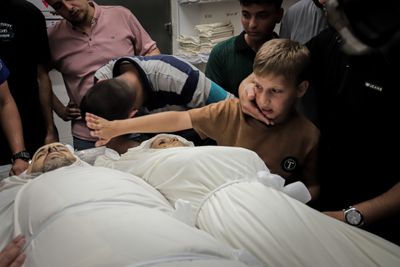
The latest victim was Al Jazeera Mubasher cameraman Ahmed Washah, who was killed on June 20, 2026, in an Israeli airstrike that hit a house in the Bureij refugee camp in central Gaza. His death came only about two months after the killing of his brother, Mohammed Washah, an Al Jazeera Mubasher correspondent, who was killed in a separate Israeli strike while returning home.
Just weeks before his own death, Ahmed appeared in a televised interview mourning his brother and delivering an emotional appeal to the international community, urging action to stop the targeting of journalists.
Following Mohammed's death, Ahmed assumed responsibility for caring for his brother's children while continuing his work documenting events on the ground. He was later killed while carrying out his journalistic duties, making the Washah brothers one of the most symbolic stories of the human cost borne by Palestinian journalists during the war.
The journalists reportedly killed after the ceasefire include Ahmed Washah, Mohammed Washah, Islam Hisham Quneita, Amal Shamali, Anas Ghuneim, Abdul Raouf Shaath, Mohammed Qishta, Mahmoud Wadi, Mohammed Al-Munirawi, Ahmed Abu Mteir, and Saleh Al-Jaafrawi.
The sequence of these incidents indicates that attacks on media professionals continued throughout the months following the ceasefire declaration, with journalists, photographers, editors, broadcasters, and media production staff among those killed in separate incidents across the Gaza Strip.
According to Palestinian media organizations, the number of journalists and media workers killed since the outbreak of the war in October 2023 has risen to 265, including 11 journalists killed after the ceasefire, making the conflict one of the deadliest ever recorded for members of the press.
The Committee to Protect Journalists (CPJ) has described the war in Gaza as one of the most lethal conflicts for journalists in modern history, noting that Palestinian reporters have borne the overwhelming burden of documenting the war while facing extraordinary risks.
CPJ has also warned that the continued killing of journalists, combined with restrictions preventing international media from entering Gaza independently, has significantly limited independent reporting and left local Palestinian journalists as the primary source of information from inside the territory.
Since the beginning of the war, Israel has not allowed foreign journalists to enter Gaza independently. Limited visits have taken place only under Israeli military escort, a policy that has drawn repeated criticism from international media organizations, which argue that it undermines independent coverage of events on the ground.
In April 2026, editors-in-chief from more than 20 international news organizations, including BBC, CNN, Reuters, and The Associated Press, issued a joint appeal calling on Israel to allow foreign journalists unrestricted access to Gaza to report independently.
The restrictions, however, remain in place.
Press freedom and human rights organizations continue to call for independent investigations into the killings of journalists, stronger protections for media professionals working in conflict zones, and accountability for violations of international humanitarian law.
For journalists still working inside Gaza, the ceasefire did not bring safety. Instead, attacks continued while those who survived remained committed to documenting events under extremely dangerous conditions.
The story of brothers Mohammed and Ahmed Washah has become one of the defining symbols of the price paid by Palestinian journalists during the war. Within less than three months, the family lost two journalists, while Mohammed's final public appeal before his death was a call for the protection of journalists from targeted attacks.
Source: JNA PRESS, based on data from Palestinian media and human rights organizations, reports by the Committee to Protect Journalists (CPJ), and published information.

mariam tarifii
Author at JNA Press
Covering Palestine, Lebanon, Syria and Middle East Affairs
View Profile