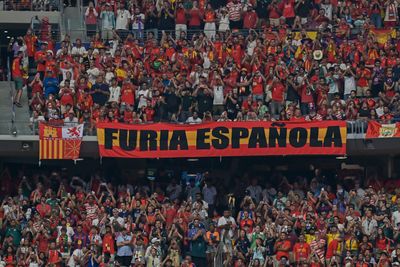

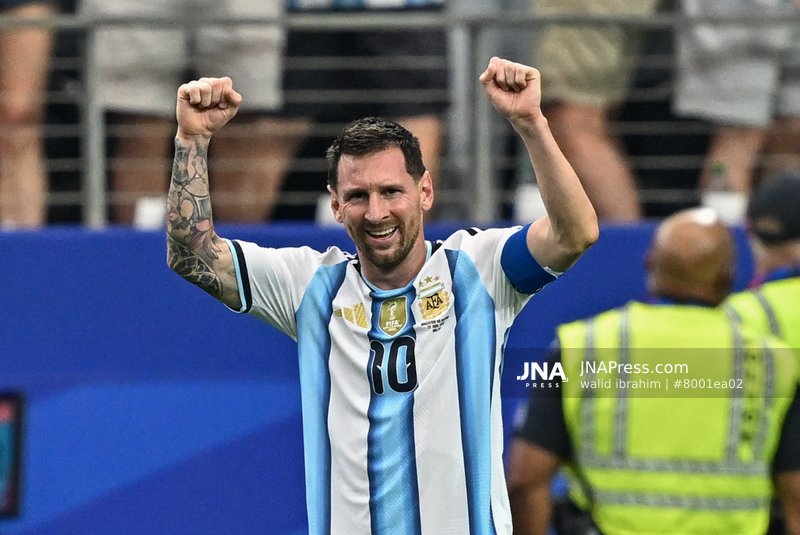
Dallas, United States- Argentina secured a 2-0 victory over Austria thanks to a Lionel Messi brace, with the captain becoming the outright leading goalscorer in FIFA World Cup history. His two goals took him to 18, overtaking Miroslav Klose's previous record of 16. Lionel Scaloni's side now top Group J and cruise into the Round of 32 after collecting six points from their opening two matches, scoring five goals without conceding. Argentina are growing in confidence with every performance, and with Messi in irresistible form, they have firmly established themselves among the favourites to win the tournament.
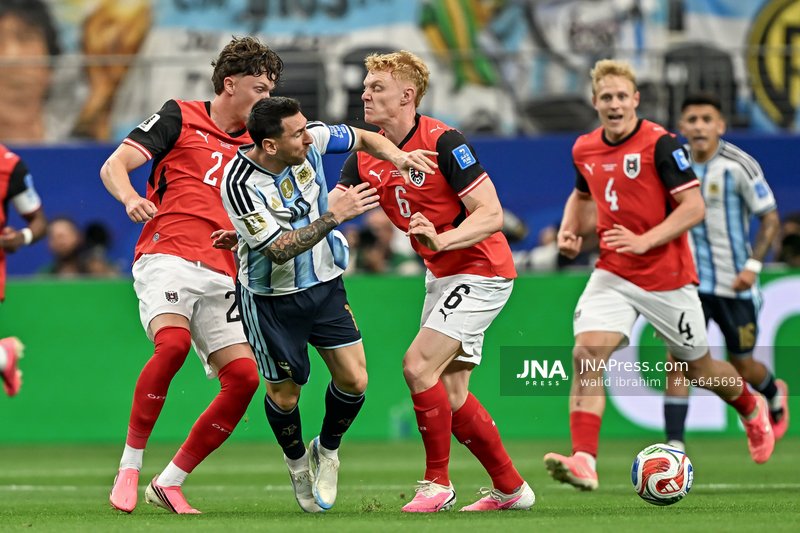
Messi simply knows no limits. Many believed that leaving FC Barcelona for Miami would amount to little more than a comfortable swansong to an already legendary career. Instead, his move away from European football was part of the journey towards the one title he had dreamt of winning since childhood: the FIFA World Cup. He fulfilled that ambition in Qatar, but there was no sense of satisfaction afterwards. Instead, he recommitted himself to the national team, while an already iconic generation – Rodrigo De Paul, Alexis Mac Allister, Enzo Fernández, Julián Álvarez, Emiliano 'Dibu' Martínez, Cristian 'Cuti' Romero and the rest – have devoted their talent and determination to their captain's cause. Argentina's No. 10 has repaid both his team-mates and an entire nation. That is why the Albiceleste dare to dream of retaining their world crown.
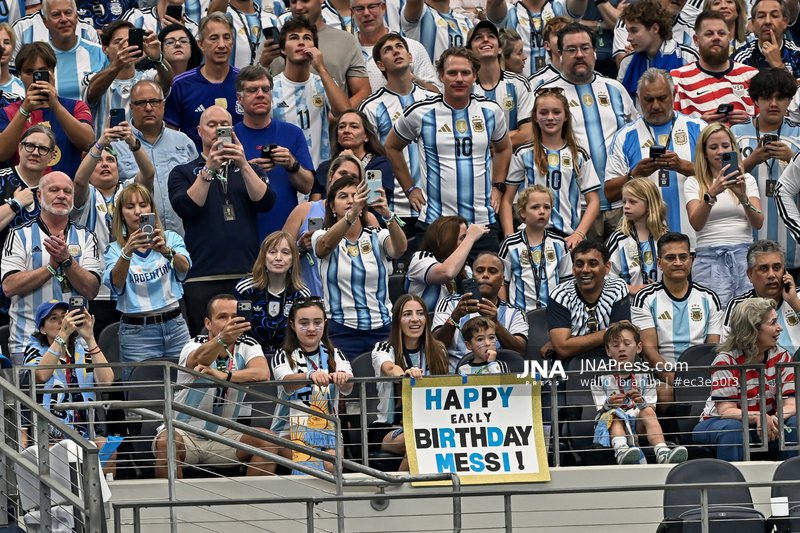
The match also marked the 40th anniversary of Argentina's unforgettable meeting with England at the 1986 FIFA World Cup in Mexico, the game that cemented Diego Maradona's place in footballing folklore. The Argentinians were determined to honour the occasion with another victory. From the opening whistle, they laid siege to Austria's goal. The Austrians competed bravely but lacked attacking imagination against Argentina's well-drilled defensive unit, confirming the doubts that had emerged following their opening match against Jordan.
Messi squandered the chance to open the scoring when he missed a penalty awarded after Lautaro Martínez had been fouled. The Argentine captain then went close again after being picked out by the Inter Milan striker, before Austrian defender David Alaba produced an excellent goal-line clearance to deny him once more. The breakthrough finally arrived in the 38th minute. A swift Argentine move worked the ball out to the left, where Facundo Medina delivered an inviting cross towards the edge of the area. Arriving late from midfield, Messi met it first time and calmly guided his finish beyond the goalkeeper.
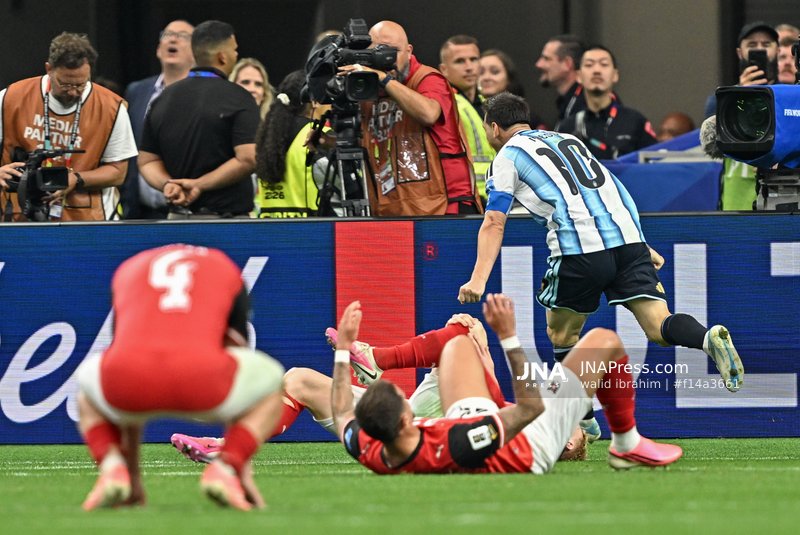
Austria enjoyed their best spell at the start of the second half. Marcel Sabitzer's free-kick forced Emiliano Martínez into a smart save, but it proved little more than an isolated threat from a set-piece. Argentina soon regained complete control, with Messi relentlessly searching for his second goal. As the minutes passed, the South Americans eased off the intensity while dictating possession and seeing the match out without any real alarm. They were keen to avoid unnecessary risks after Cristian Romero, one of the cornerstones of their defence, was forced off through injury. Deep into stoppage time, Messi finally grabbed his second, reacting quickest to a loose ball in a crowded penalty area before poking home through a sea of Austrian defenders.
Argentina have won again, and everything appears to be falling into place. They seem capable of operating well below full throttle, needing only the minimum effort to dispatch their opponents while still keeping another gear or two in reserve. That makes them an exceptionally dangerous side. Sooner or later, however, they will face a genuine examination. The real question is how resilient this team will prove when performances dip, injuries take their toll or Messi is unable to provide his usual inspiration. Only then will we discover just how far the world champions can really go.
Photos by Walid Ibrahim