
TANGERANG, Indonesia — Not far from Tangerang's Old Market, a red tent stands on the side of Kalipasir Indah Street, Sukasari Village, Tangerang, Indonesia. The tent stands right above the Peh Cun Pier sitting on Cisadane River, where the Chinese-Indonesian community is preparing for the peak event of the Dragon Boat Festival, or Peh Cun. This sacred celebration falls on the 5th day of the 5th month of the Chinese calendar, or June 19, 2026. The Dragon Boat Festival committee coming from Boen Tek Bio Temple, not far from the location. They looks busy preparing an altar, sound systems, and even a registration desk for the competition.
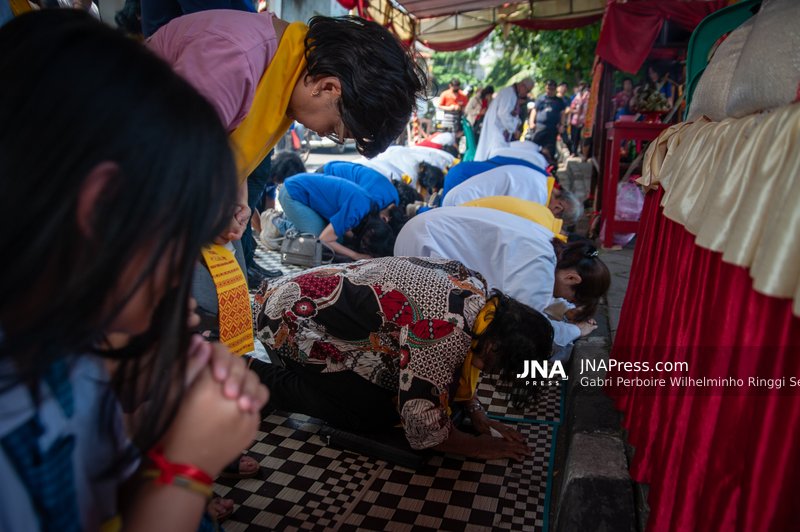
At exactly 11 AM, the event began with the Yuè prayer during Duān Yáng. Dragon Boat Festival Public Relations Officer Yap Cun Guan (59) explained that Duān means upright or extreme and Yáng means sun or positive energy. This upright sun happens during the peak of summer around 11-13 AM. In this time humans are reminded to always be aware of God's power and to maintain a harmonious relationship between the universe and humanity.
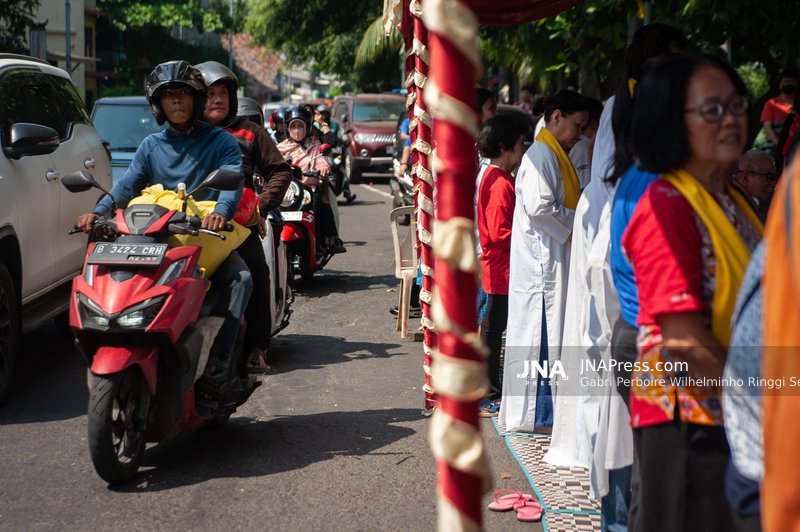
Dressed in dark blue robes, Confucian priests led the Yuè prayer service. Incense was lit, prayers were recited, and prostration were performed.
Just before the prayer service concluded, two longboats with dragon heads arrived from upstream Cisadane. The people aboard the boats were joyful as they arrived at Peh Cun Pier. However, this year there will be no boat races or duck-catching competitions like in previous year because the Boen Tek Bio Temple management is focusing on renovating the boat storage area in Tanah Gocap, Tangerang.
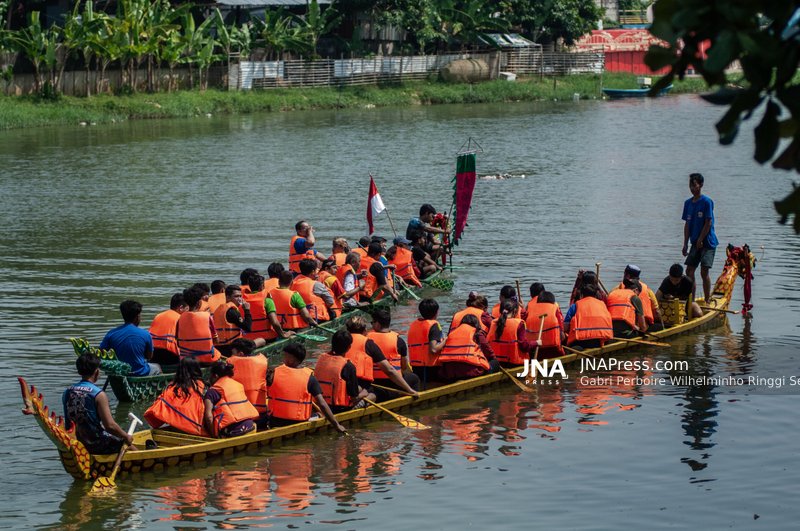
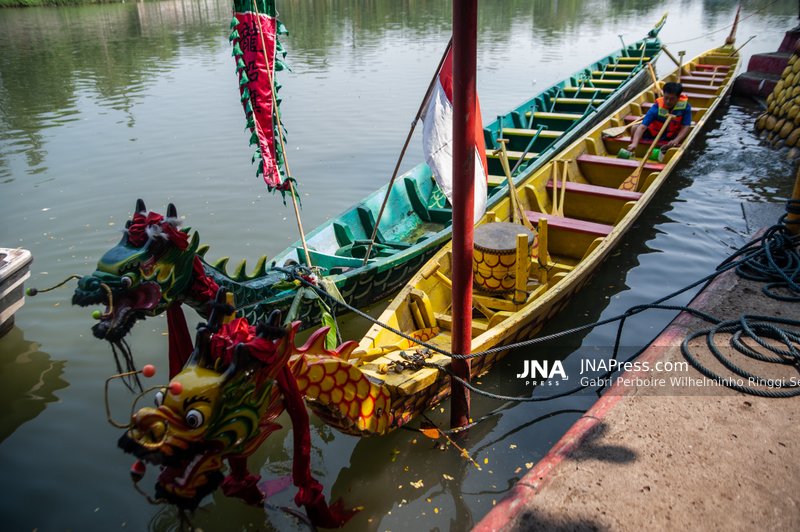
Around 11:30 AM, as the boat docked, priests and religious leaders were ready on the dock to throw rice dumpling or zòngzi, a food closely associated with Peh Cun. The throwing was continued by the people lining up behind them.
The Dragon Boat Festival is said to have originated during the Warring States Period (475–221 BCE). At that time, seven states vied for power. One of them was the highly aggressive Qin state. In the Chu state, a minister with skilled diplomacy was named Qu Yuan engaged a diplomation with the Qi state to attack Qin. However, he was slandered and exiled. During his exile, he learned that his state had collapsed due to the Qin invasion. Out of love for his country, he drowned himself in the Miluo River.
Yap Cun Guan said that Qu Yuan was a kind person who became close to the community during his exile. When Qu Yuan drowned, panicked fishermen flocked to search for him by boat. These hundreds of boats gave rise to the term Peh Cun, where Peh means hundreds and Cun means boat.
The tradition of throwing rice dumpling also originated from the throwing of food to prevent Qu Yuan's body from being eaten by wild animals. Over time, the rice given was cooked and became provisions for fishermen searching for Qu Yuan.
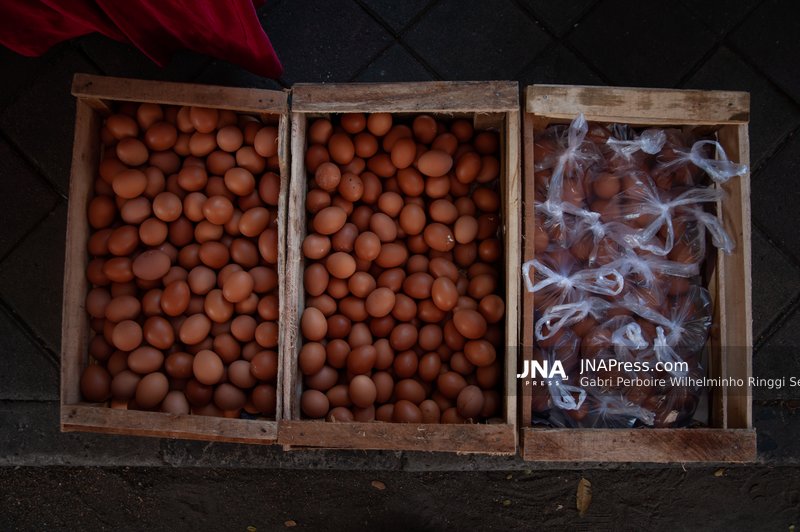
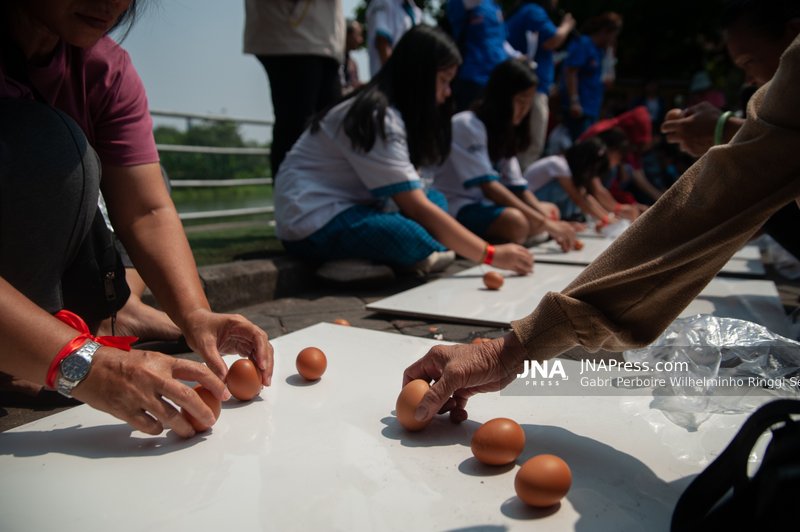
After throwing rice dumplings, the event continued with the egg-balancing competition. The extreme gravitational pull at the height of summer is thought to help the eggs balance. The organizers then distributed eggs to those who wanted to participate in the egg-balancing tradition, not just those who competed. Children from local schools also competed, setting eggs on ceramic tiles provided by the organizers while people that did not compete set their eggs elsewhere, such as on the sidewalk across the event. Some people who managed to set their eggs were ecstatic, while others continued trying until time ran out. Those who managed to set their eggs first won the competition and received prizes of household appliances.
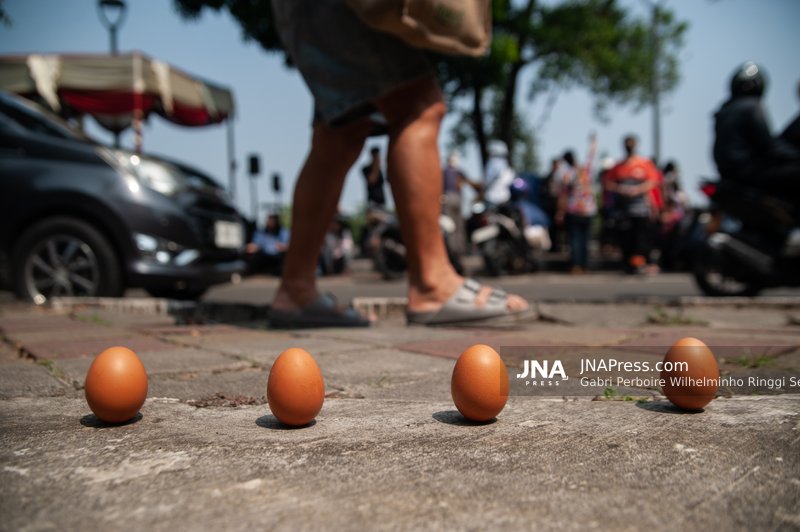
This tradition has been practiced in Tangerang since 1910 and continues to this day. Herlinawati (48), also known as Merry, the Head of Dragon Boat Festival committee, explained that besides the ritual, this is a tradition that Boen Tek Bio holds annually and always involves the younger generation. According to her, they are the next generation who can maintain the Peh Cun tradition in Tangerang.
Yap Cun Guan also stated that wherever someone is, they should remember their cultural roots. This includes the Chinese-Indonesian community in Tangerang.
Photo by Gabri Perboire / JNA Press
Gabri Perboire Wilhelminho Ringgi Sengga
Author at JNA Press
Freelance photojournalist. Email: gabriperboire@proton.me Insta: gabriperboire
View Profile