
YOGYAKARTA, Indonesia— There is unique tradition in the Suroloyo mountain, the highest peak in the Menoreh mountain range at Kulonprogo, Yogyakarta, Indonesia. This tradition is carried out to celebrate the Islamic new year at 1st Muharram. Javanese people have slightly different calender system but because of the aculturation of Javanese culture and Islam, there is modification so the new year on Javanese Calendar the same with Islamic Calendar. Javanese people call that day 1st Suro night.
This new year of 1448 AH on June 16, 2026, people near the Suroloyo mountain, especially Keceme village’s people will do the 1st Suro Night tradition that consist of Kirab and Jamasan.
Both of this tradition in Suroloyo mountain started in 1986 after Sultan of Yogyakarta Hamengkubuwono IX give Suroloyo region a Kyai Manggala Murti Spear and Songsong Kyai Makuta Dewa. Songsong is an umbrella of greatness.
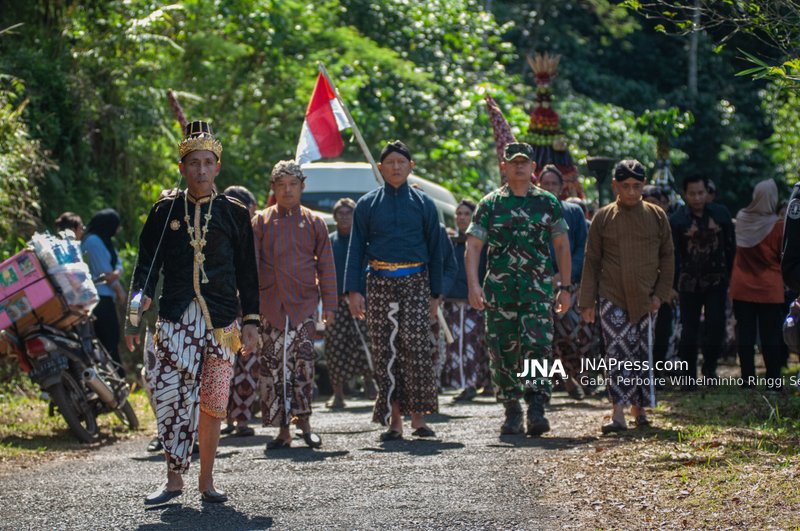
This set of rituals aims to care for the two heirlooms and already started on the night before at June 15, 2026 to prepare for the big day. People will do tasyakuran and tirakatan where they will stay awake overnight and pray for salvation and and also pray in gratitude for prayers that have been answered. This happens at Ki Bekel Surakso Kemat (50) house, the caretaker of Suroloyo’s mountain.
Everyone who is part of the procession starts getting ready at 3 AM and they wear complete Javanese traditional clothing. On the morning of June 16, 2026, they preparing for Kirab, a procession where people parade following the caretaker carrying ancestral heirlooms.
The Kirab started from heirlooms storage house at 10 AM and carried out by the Bregodo Rakyat or People's Brigade, a marching movement that imitates the formations and manners of the soldiers of the Yogyakarta Sultanate. The Bregodo consists of a Manggala (troop leader), followed by a flag or banner bearer, a gunungan (mountain of agricultural goods) and offerings bearer, and a musical corps.
In the middle of the procession, the caretaker and traditional elders will join the Kirab. Then the Bregodo do the Ling Tinampen Pusaka, where the parade will stop to check and handover the heirlooms.
After that, the parade will continue their uphill journey until they arrive at Kawidodaren Spring where they will do the Jamasan. It’s a the tradition of washing and caring for ancestral heirlooms. The heirloom is washed using water that has been sprinkled with Kembang Tujuh Rupa or seven types of flowers and lime to remove dirt and rust.
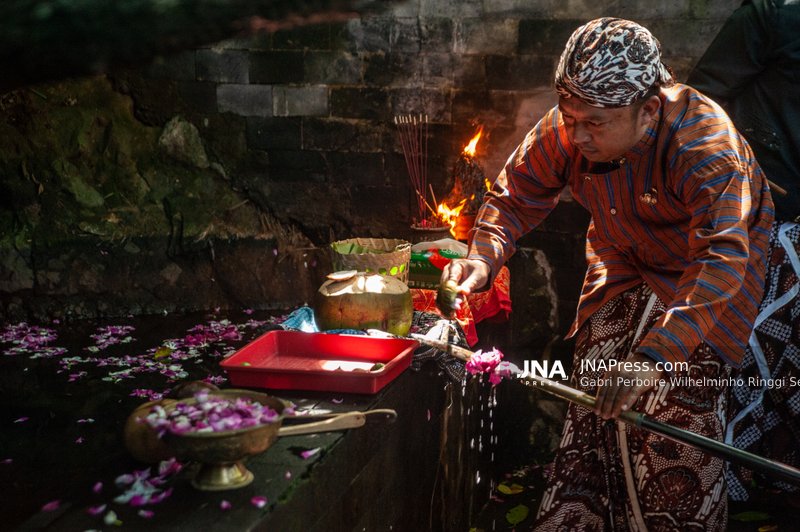
After the Jamasan tradition end, the heirlooms will stored temporarely in the weapon room at the Kawidodaren Spring before being store again at the heirloom storage.
The gunungan brought earlier are placed in the midst of the community will be sprinkled with water from the Kawidodaren Spring, after which the community may partake. The community appears happy and scrambles to collect the goods. The gunungan represents gratitude for the abundant blessings of the Suroloyo’s land and will be distributed to the community.
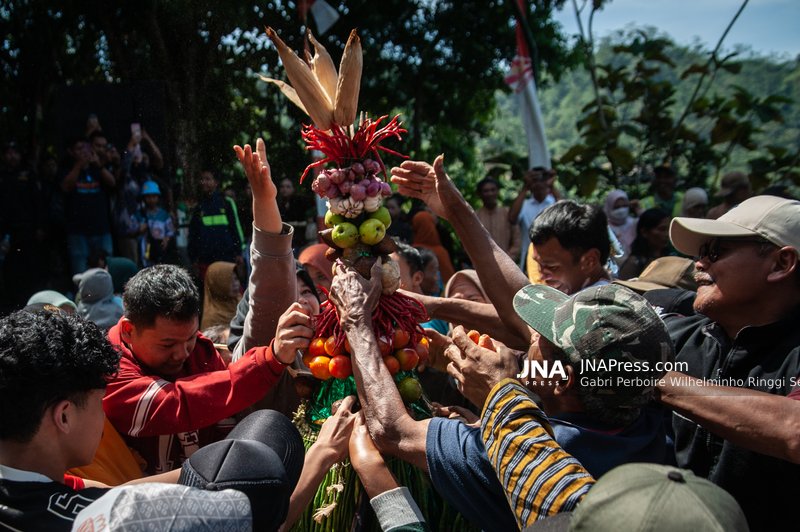
Ki Bekel Surakso Kemat says that this tradition is part of nguri-uri or efforts to maintain, maintain and develop traditions, values and ancestral heritage amidst changing times.
Photo by Gabri Perboire / JNA Press
Gabri Perboire Wilhelminho Ringgi Sengga
Author at JNA Press
Freelance photojournalist. Email: gabriperboire@proton.me Insta: gabriperboire
View Profile