

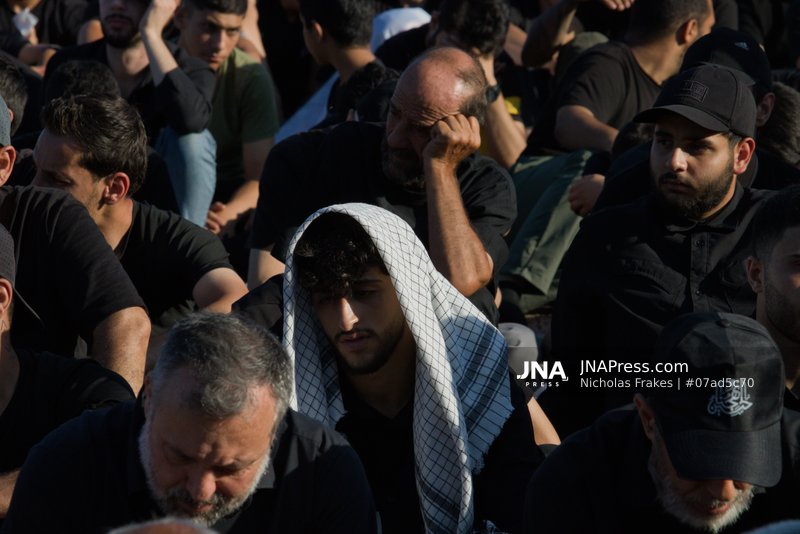
BEIRUT, Lebanon - Under the harsh summer sun, tears mixed with sweat as the story of Imam Hussein’s martyrdom in the seventh century blared on speakers, reverberating on the surrounding buildings in the Jnah neighborhood of Beirut’s southern suburbs, blanketing the thousands of people in attendance in its flowing cadence.
Sheikh Ali Salim’s words quivered as he himself became overwhelmed by the emotions wrought by Imam Hussein’s story, causing him to pause his recitation of the battle that took place in 680.
Dressed in black, people openly sobbed as the story reached its inevitable climax. Crying during Ashura is nothing new. In fact, it is a common occurrence due to the highly emotional nature of Hussein’s death and the deep spiritual connection that many Shia have to his story. However, this time, the tears that commemorators were wiping away with tissues that were handed out by the handful were not solely for Hussein and his family. They were for themselves and for Lebanon.
Nearby was the building housing the grave of former Hezbollah leader Hassan Nasrallah, providing a little shade and a temporary reprieve from the punishing heat. It was also another reminder of what has been lost in these recent wars.
Over the last three years, most of the people sitting on the carpets laid out on the concrete have been displaced by the two wars between Hezbollah and Israel. Some have lost their homes. Others lost people they cared about.
Fatima Fayyad, 44, sat on a plastic chair on the side of the road, a thin cigarette held between her fingers, dropping ash onto the stone below her.
For her, the Battle of Karbala was no longer merely a story that she would hear every year. Today, it is on our doorstep."Karbala is now where we live. It is here,” Fatima told JNA Press.
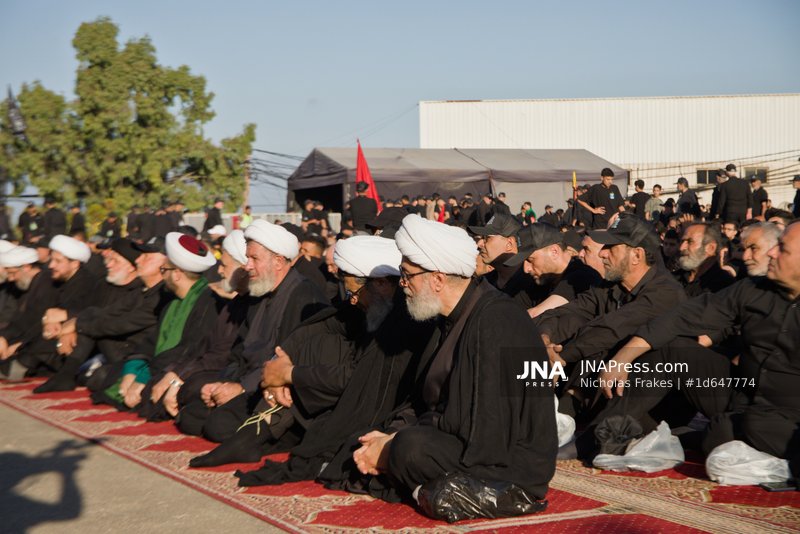
Ashura is one of the holiest and most important days of the year for Shia Muslims.
In Lebanon, beyond being a religious day, it is also a time that brings communities together.
During the days leading up to Ashura, there are the gatherings that are held at the husseiniyeh, religious centers where Shia meet to listen to lectures and discuss religion, but much of the real connection comes outside of any religious institution.
Throughout Dahiyeh, the Arabic shorthand for Beirut’s southern suburbs, there are numerous stands offering free food to everyone. On the street, groups will hand out water, juice, coffee and snacks to anyone happening to drive through the area. Meanwhile, speakers, dialed up to as loud as they can go, blast songs and chants honoring Hussein for his sacrifice.
These traditions are something that have not changed. What has changed, according to Fatima, is the feelings surrounding them.
Following the recent wars, she said that there was a deeper sense of belief this year since feelings are much more intense and elevated.
"There is a deeper belief now. There is a greater presence now,” she explained. “We wait for this day each year. Many of us are from the south. We are displaced from the south. There are also those displaced from Dahiyeh. But, today, the tenth day [of Muharram], we need to speak.”
Narjes Fayyad, 23, agreed with Fatima’s assessment.
“There are deeper beliefs today,” she told JNA Press. “Many of us are displaced.”
Both Fatima and Narjes are from the border region of southern Lebanon, an area that has been one of the hardest hit by Israel in the recent war, where nearly entire villages have been razed to the ground. Because of this, it has only become more important for them to continue with the example set by Hussein over a thousand years ago and resist tyranny at all costs.
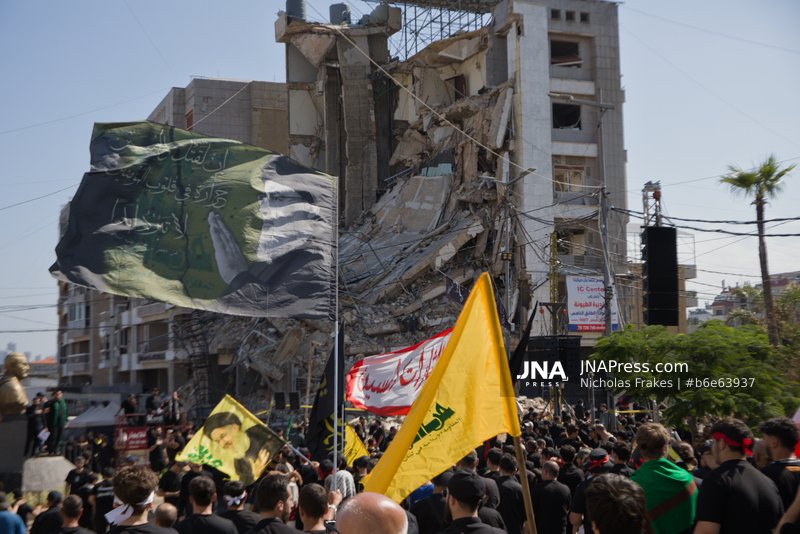
The Ashura procession has become ubiquitous with the annual commemoration. During it, those taking part walk together while either listening to or chanting in reverence to Hussein.
However, the procession has a deeper meaning than just a literal march. For those who firmly believe, it also means to walk in the steps of Hussein and continue on his path. This is something that has become important more so than ever before.
“With this march, we want to walk and we have this belief that this march needs to continue. If we don’t continue it, our children will not continue with it. From generation to generation, we need to keep going,” Fatima stated.
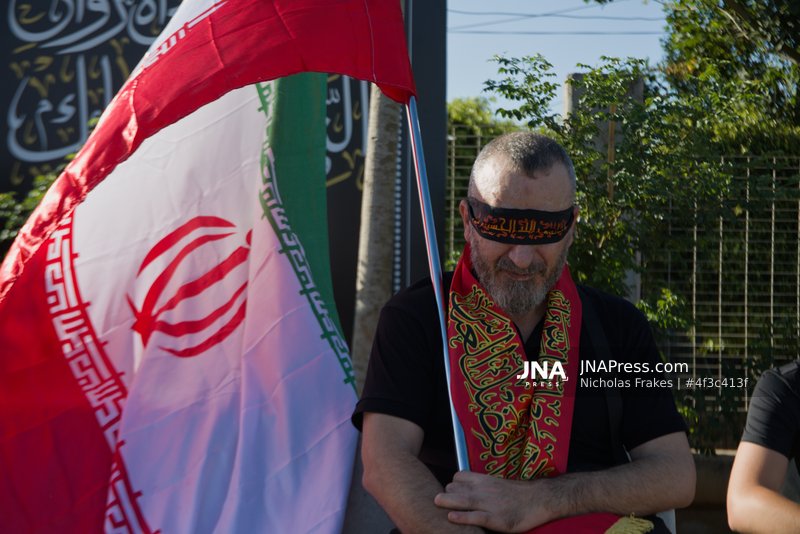
As people marched together for the latest Ashura, chants about the south and how everywhere is Karbala appeared to speak to the sentiment among participants.
“[Karbala] is happening here,” Narjes said.
While they are quick to clarify that there is a vast difference with what Hussein and his family experienced all those years ago, it is the general feeling of what is occurring today that makes them believe that there are similarities.
According to Lebanon’s Health Ministry, over 4,200 people have been killed and over 12,100 others have been injured by Israeli attacks on Lebanon.
“In some cases, we only find people’s bones. In some cases, they have to do DNA tests just to be able to tell their families that their loved one was martyred,” Fatima stated.
There is also a prevailing sense that they are alone, with very few standing beside them to support them, all the while Israel continues to enjoy support from the United States and countries around the world.
All of this has only served to highlight the need to continue on the path of Hussein.
“Nothing can deter us, whether it is the Israelis, America or even our own government. Nothing,” Fatima said. “We need to continue the procession.”
Photo and text by Nicholas Frakes /JNA Press

Nicholas Frakes
Author at JNA Press
I am a journalist and photojournalist based in Lebanon covering the Middle East. I have worked in the region for nearly a decade and have covered everything from popular uprisings to economic crises to the recent wars in Lebanon.
View Profile